January 2026

News In Brief, Startups

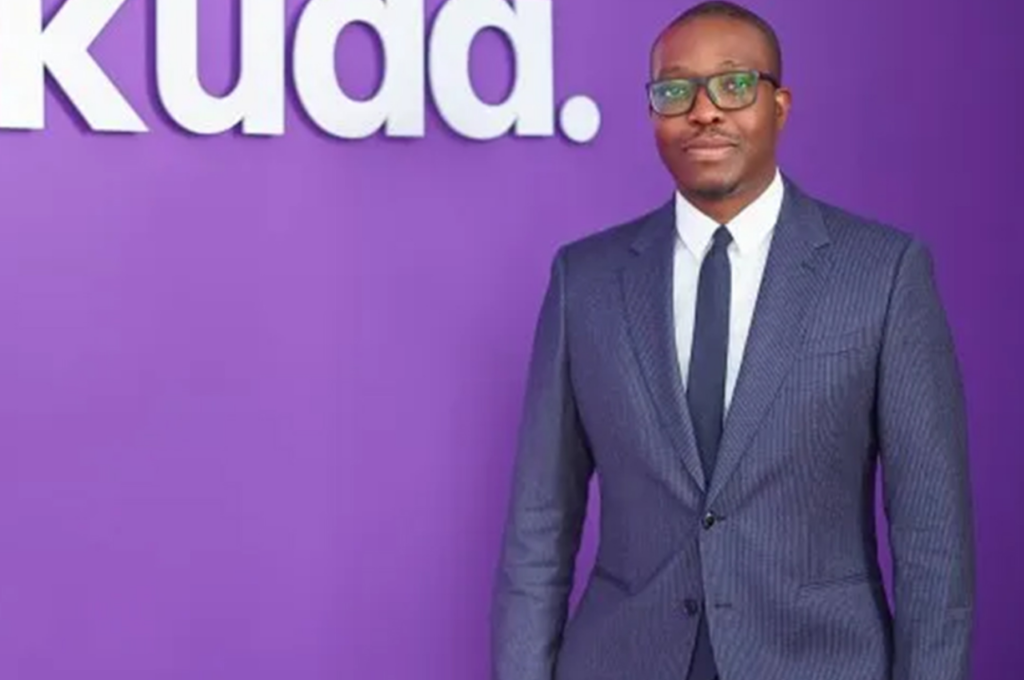
Kuda Prepares Physical Expansion After Securing National Banking Licence

Kuda Microfinance Bank is preparing to expand its physical presence across Nigeria after receiving a national microfinance banking licence from the Central Bank of Nigeria, a shift that reflects both regulatory expectations and the bank’s growing scale. The upgrade removes the geographic limits attached to Kuda’s former unit microfinance licence and requires the digital bank to establish experience centres nationwide. These centres are expected to offer in person customer support and serve as community engagement points, while digital services remain central to the business. Managing director and chief executive Musty Mustapha said the licence marks an important step in Kuda’s evolution as a regulated institution, giving it flexibility to meet customers both online and offline. The decision also highlights a broader regulatory push to align licensing structures with how large fintechs now operate. In January, the central bank also upgraded the licences of Moniepoint and Opay, citing the need for customers, particularly in the informal sector, to access physical offices for dispute resolution. The move, however, brings higher costs. National microfinance banks face stricter compliance rules, mandatory public disclosure of accounts, and significantly higher capital requirements. Kuda’s minimum paid up capital rises to five billion naira from two hundred million naira, following a twenty million dollar funding round in 2024 that valued the company at five hundred million dollars. Operationally, Kuda continues to scale. In the first quarter of 2025, it processed more than three hundred million transactions worth fourteen point three trillion naira and issued sixteen point four billion naira.

Africa Focus, News In Brief, Tech

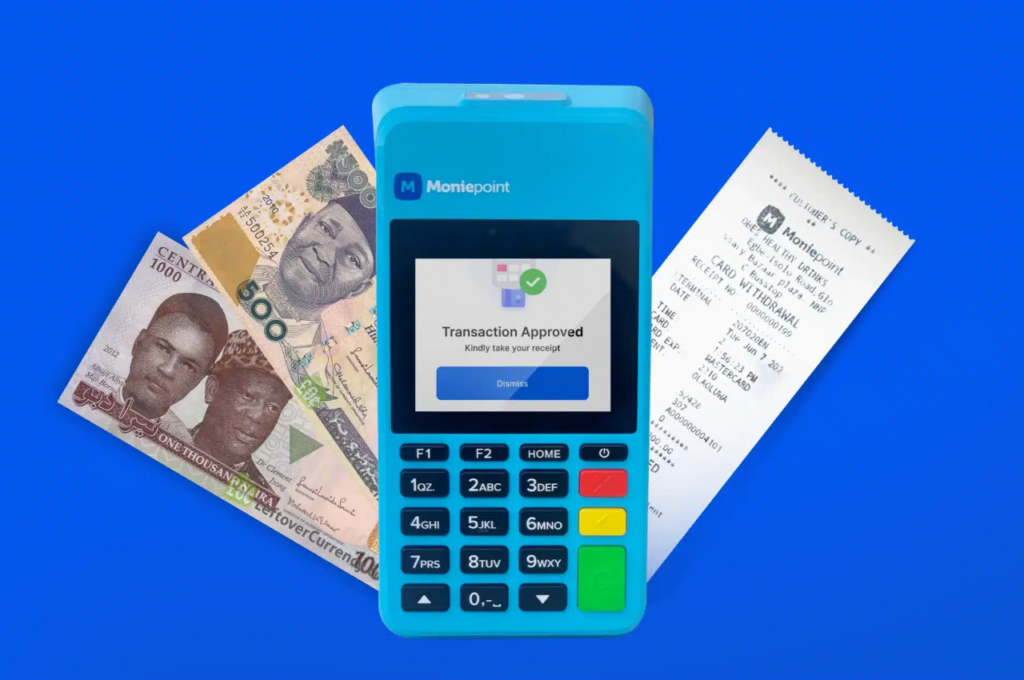
Moniepoint’s Volumes Show How Deep Digital Payments Run in Nigeria

Moniepoint has quietly become one of the central pipes through which Nigeria’s everyday commerce now flows. Internal company data shows the fintech processed more than 14 billion transactions in 2025, nearly triple the 5.2 billion recorded two years earlier, underscoring how fast digital payments are scaling across the country. Those transactions were valued at about ₦412 trillion ($294 billion), almost double the $150 billion processed in 2023. On a monthly basis, Moniepoint averaged roughly 1.67 billion transactions in 2025, up from 433 million previously. The growth reflects broader shifts in Nigeria’s payments landscape. Cash shortages in 2023, banking outages linked to core system migrations, and tighter cash policies from the central bank pushed consumers and merchants toward fintech platforms. In response, Moniepoint and peers expanded aggressively, rolling out point of sale terminals and agency banking services nationwide. Founded by Tosin Eniolorunda, Moniepoint has built its scale by serving small businesses that traditional banks have struggled to reach. Provision stores, transport operators, fuel stations, and market traders now account for a large share of its volumes, making the informal economy a key driver of growth. The transaction depth has also shaped the company’s next phase. In 2025, Moniepoint disbursed more than ₦1 trillion in loans to small businesses, using payment data to manage risk and keep defaults low. It also expanded cards, savings, and remittances as it moved closer to full service banking. This scale places it among influential financial platforms in Nigeria currently.

News In Brief

NCC Tightens Enforcement, Targets ₦12.4 Billion in Telecom Fines

Nigeria’s telecoms regulator is preparing penalties of about ₦12.4 billion ($17.3 million) for breaches of service standards, tightening oversight after months of consumer complaints about patchy networks. The push follows a directive from Communications Minister Bosun Tijani, who asked the Nigerian Communications Commission to introduce automatic penalties tied to poor network performance. In response, the NCC says it is updating its Enforcement Processes Regulations to strengthen deterrence and add offences not covered under the Nigerian Communications Act 2003. Meanwhile, revised Quality of Service rules issued in July 2024 widened performance obligations, including for colocation providers, and introduced stiffer sanctions. After a transition period through 2025, the commission set September as the compliance deadline. In October, the NCC fined Globacom, Airtel, and IHS Towers a combined ₦45 million. However, the larger liabilities now in process relate to additional breaches, with pre enforcement notices already issued, the regulator said. At the same time, the commission approved tariff adjustments in January 2025, saying it aimed to balance consumer protection with rising operator costs. It reported that the sector attracted more than $1 billion in capital investment in 2025 and added or upgraded over 2,850 network sites nationwide. Looking ahead, the NCC said it is narrowing consumer protection efforts to network quality, unexpected data depletion, and refunds for failed airtime and data transactions. It added that it is finalising a Spectrum Roadmap for 2025 to 2030, which it expects to release in March 2026.

News In Brief

PayPal Re-Enters Nigeria Through Paga, Enables Incoming Payments

PayPal come back to Nigeria and has expanded access to its services in Nigeria through a partnership with local fintech Paga, allowing individuals to receive international payments and withdraw funds in naira after years of limited functionality in the country. The integration was announced by Tayo Oviosu, Paga’s founder and group chief executive, who said he first proposed a partnership with PayPal in 2013, when Nigeria’s online payments market was still in its early stages. Under the arrangement, users can link their PayPal accounts to Paga wallets, receive money from abroad at scale and view PayPal balances directly within the Paga app. Funds can be converted at willing buyer willing seller rates and withdrawn locally, while users also have the option to keep balances in dollars for online purchases where PayPal is accepted. The setup also enables Nigerians to receive money from Venmo users in the United States through PayPal’s global network, widening access to peer‑to‑peer transfers from abroad. PayPal had restricted Nigerian accounts to “send only” status from around 2004, citing fraud and compliance concerns. Subsequent steps, including a 2014 tie‑up with First Bank and a 2021 collaboration with Flutterwave, improved outbound payments and merchant acceptance but left most individuals unable to receive funds directly. The latest move marks PayPal’s most significant expansion of inbound payments for Nigerian users to date. The return comes as global payments firms increasingly rely on local rails to navigate regulatory and operational hurdles in emerging markets. Paga said it processed about 17 trillion naira across 169 million transactions in 2025 and now has more than 21 million users. Nigeria’s broader digital payments market has also been growing rapidly. Transaction value rose to 1.07 quadrillion naira in 2024 from 600 trillion naira in 2023, and reached 284.99 trillion naira in the first quarter of 2025. In December 2025, PayPal said it was in talks with Nigerian fintech companies under PayPal World, an interoperability programme designed to connect PayPal with local wallets in key markets.

News In Brief, Startups

OneDosh Raises $3 Million Pre Seed to Build Stablecoin Payments Between US and Nigeria

OneDosh has raised $3 million in pre seed funding to build stablecoin powered infrastructure for cross border transfers, starting with the United States to Nigeria corridor. Founded in February 2025 by Jackson Ukuevo, Godwin Okoye, and Babatunde Osinowo, the startup grew from the founders’ own headaches moving money across countries. Ukuevo, the chief executive, said cards were blocked, accounts were frozen, and transfers stalled under currency controls. The team concluded that demand is there, but the underlying systems are outdated. OneDosh is live in the U.S. and Nigeria. It lets users send money between both countries, hold value in stablecoins, and spend through a stablecoin linked card that can be added to Apple Pay and Google Pay and used wherever Visa is accepted. Alongside the consumer product, the company is building programmable stablecoin rails that connect wallets, cards, and markets into a single settlement layer. It says the rails are designed to make cross border payments simpler for individuals and businesses that move funds often. The founders bring compliance and payments experience from firms such as ZeroHash and Plaid, plus product experience from Amazon. Next, OneDosh plans to use the funding to expand into new corridors, strengthen liquidity partnerships, and hire senior talent as it scales operations. The round comes as stablecoins gain ground across Africa as a tool for day to day value storage and cross border spending this year.

African Changemakers, Editors Pick

Inside GB Agboola’s Playbook for Building Africa’s Payment Rails

On a good day, paying an African business should feel as easy as sending an email. In practice, it rarely does. A merchant in Lagos selling to a customer in Nairobi. A startup in Accra charging cards from London. An enterprise in Johannesburg settling across multiple currencies. The promise of digital trade is there, but it often breaks down into familiar friction: incompatible payment methods, uneven regulations, slow settlements and failed transfers. That problem is where Olugbenga “GB” Agboola has spent most of his career. As co‑founder and Chief Executive Officer of Flutterwave, Agboola has helped build one of Africa’s most consequential pieces of financial infrastructure: payment rails that quietly move money across borders, currencies and systems. It is the kind of work most people only notice when it fails, and the kind that determines whether Africa’s digital economy can scale at all. Agboola may not the loudest figure in African fintech. But his work sits at one of the sector’s hardest truths. Commerce cannot scale smoothly if money cannot move smoothly. A Builder From the Systems Layer Agboola’s professional trajectory points to someone comfortable operating deep in the systems layer. Before Flutterwave, he worked on fintech products at global firms including PayPal, gaining exposure to how payments infrastructure works at scale. Flutterwave was founded in 2016 by Iyinoluwa Aboyeji, Agboola and Adeleke Adekoya, with Aboyeji as the first CEO and Agboola initially serving as CTO. The idea itself was straightforward. The execution, however, was not. Africa’s internet economy was growing rapidly, but cross‑border payments between businesses remained fragmented and expensive. Each new market required rebuilding integrations, renegotiating bank relationships and navigating different regulatory regimes. Flutterwave leaned into an infrastructure thesis: abstract that complexity away and let merchants focus on selling. The CEO Seat Came With a Different Job By 2018, Flutterwave had become one of the companies used to explain Africa’s fintech momentum. That same year, Agboola stepped into the CEO role. His mandate was clear. Expansion beyond Nigeria and a sharper focus on fixing cross‑border payments across the continent. Flutterwave’s positioning evolved from a promising startup into a pan‑African infrastructure company. That shift became impossible to ignore in February 2022, when Flutterwave raised $250 million in a Series D round, pushing its valuation above $3 billion. The round was a global signal that Africa’s infrastructure‑led fintechs could attract serious capital and scale rapidly. But in payments, the real test often begins after the valuation headline fades. Scale brings scrutiny, and infrastructure companies are judged as much on controls as on growth. When Scale Brings Heat Flutterwave soon entered a period of public scrutiny, marked by allegations, internal turmoil and cross‑border legal challenges. For a payments company, such moments are existential. Bank partnerships, regulator confidence and enterprise trust are all at stake. This is the part of fintech building that rarely makes glossy pitch decks. Payments companies operate in regulated, high‑trust environments. When pressure mounts, systems and governance are tested in real time. During this period, Flutterwave also worked to strengthen its regulatory footing at home, securing a Switching and Processing Licence from Nigeria’s central bank. Licences at this level are quiet symbolic. They shape how a company is classified, who it can partner with and how regulators view it as it evolves from startup into infrastructure. The Bet He Is Still Making Flutterwave’s story has included rapid growth, controversy and the kind of scrutiny that follows any payments platform once it becomes too important to ignore. Through it all, Agboola’s focus has remained consistent. He has chosen to stay in the hardest layer of fintech. The one where success is measured not only by visibility, but by whether money moves cleanly, securely and predictably every day. It is not glamorous work. It sits at the intersection of regulators, banks, merchants and markets, each pulling on the same system. But it is the work that makes everything else possible. As Africa’s digital trade expands, the founders who matter most will not be those who promise disruption alone. They will be the ones who can keep the rails steady through growth, scrutiny and change. GB Agboola is still building for that standard.

African Changemakers, Editors Pick, Founder Stories

Odunayo Eweniyi: The Operator Who Made Saving Cool Again

 At the start of every year, millions of Nigerians open a notes app and write the same promise: I will save more. By February, reality intervenes – rent is due, transport costs spike, family needs appear unannounced. Saving becomes aspirational rather than practical. Odunayo Eweniyi built her career by refusing to ignore that reality. As co‑founder and Chief Operations Officer of PiggyVest, Nigeria’s largest digital savings platform, Eweniyi helped turn saving money from a good intention into a repeatable habit for more than six million users. Not by moralising discipline—but by designing for how Nigerians actually live, earn, and spend. However, PiggyVest grew by treating that reality as the starting point, not an excuse. And at the centre of that work is Odunayo Eweniyi, co-founder and Chief Operations Officer, one of the operators who helped turn saving money from a wish into a routine many nigerians can actually keep. A Familiar Idea, Executed Relentlessly PiggyVest’s origin story is notably unglamorous and that is precisely its advantage. Launched in January 2016 as Piggybank.ng, the company started with a single focus: savings. Investments came later, after a rebrand to PiggyVest in 2019. The sequencing mattered. While many fintechs raced to expand product suites, PiggyVest chose depth before breadth. The core insight was simple: Nigerians already save. They just do it informally—through kolo, rotating savings groups, and self-imposed restrictions. PiggyVest didn’t attempt to replace those habits. It digitised them, added structure, and removed friction. That restraint reflects Eweniyi’s operational philosophy: innovation works best when it feels familiar. When Operations Become the Product In fintech, trust is not a slogan, it is an outcome. And outcomes are operational. As COO, Eweniyi sits at the fault line where ambition meets execution: delayed withdrawals, support backlogs, policy breakdowns. These are not theoretical risks; they are existential ones. A savings platform does not get second chances. PiggyVest’s early identity was built around consistency. Users could save daily, weekly, or monthly, mirroring irregular income patterns. But convincing someone to save is only the beginning. Once you accept their money, you inherit a promise: it must be secure, accurately tracked, and accessible when expected every time. That promise is operational, not marketing-led. Under Eweniyi’s stewardship, PiggyVest focused less on hype and more on reliability, gradually converting trust into routine. Quiet Capital, Clear Signals PiggyVest’s funding history mirrors its strategy. In 2018, the company raised $1.1 million, led by LeadPath Nigeria, with participation from Village Capital and Ventures Platform. It was not a headline-grabbing round, but it sent a clear signal. At the time, PiggyVest was still early, still focused, still committed to a single behavioural shift: helping people save consistently. Growth would come later. In a market that often rewards noise, PiggyVest chose iteration. When the Numbers Speak for Themselves Today, PiggyVest no longer needs to explain its relevance. In 2025, the company reported ₦1.3 trillion paid out to users, a 56% increase from ₦835 billion in 2024. Its user base crossed six million. These are not vanity metrics; they represent repeated financial behaviour at national scale. People download apps out of curiosity. They only trust them with money over years if the system works. Crucially, PiggyVest reached this scale without trying to be everything at once. Savings came first. Investments followed only after trust was established. Designing for Real Life, Not Ideal Users Much of consumer fintech assumes tidy financial lives—predictable income, stable expenses, surplus cash. Nigeria rarely offers such conditions. PiggyVest’s product logic reflects lived experience: small amounts, automation, intentional friction against impulsive withdrawals, and group-based structures that resemble offline savings circles. Informal systems are not alternatives to banking in Nigeria, they are the system. PiggyVest’s innovation was not disruption for its own sake, but better rails for behaviour people already trusted. Building Beyond the Balance Sheet Eweniyi’s influence extends beyond PiggyVest. She is also a co‑founder and general partner at FirstCheck Africa, an early-stage investment platform backing startups founded or co‑founded by women. The move is less about branding than ecosystem correction. In African tech, access to early capital remains uneven. Writing the first cheque often determines who gets to compete. By shifting from founder to early investor, Eweniyi is helping reshape participation, not just outcomes. The Power of Boring Done Well African fintech has no shortage of ambition. What it lacks are enough builders who win by making discipline feel achievable for millions. Eweniyi is not a loud symbol or a motivational trope. Her work is quieter and more durable. She represents a class of African founders who understand that the most transformative products are often the least glamorous: systems that hold, routines that repeat, and trust that compounds. In a market obsessed with speed, Odunayo Eweniyi built endurance.

Africa Focus, African Changemakers, Editors Pick

How Nathan Nwachuku and Maxwell Maduka Are Rewriting Africa’s Defense Story

When African governments think about securing power plants, mining sites or national borders, the instinct has long been to look outward. Imported systems, foreign contractors and long procurement cycles have defined the continent’s defense infrastructure for decades. Nathan Nwachuku and Maxwell Maduka are building in the opposite direction. The Nigerian founders of Terra Industries are part of a small but growing group of African entrepreneurs tackling one of the continent’s hardest problems: how to protect critical infrastructure using locally built, locally operated defense technology. Their bet is that security, like payments or energy, works best when it is designed close to the realities it serves. Founders Building for the Hardest Layer Founded in 2024, Terra Industries reflects its founders’ appetite for complexity. Defense technology is capital‑intensive, highly regulated and politically sensitive. It is not a space that rewards quick wins or surface‑level innovation. But Nwachuku and Maduka chose it anyway. Rather than building consumer software or light enterprise tools, they focused on the systems layer of security. The kind that operates across land, air and water. The kind that must work continuously, quietly and without failure. Their approach combines hardware and software, integrating surveillance drones, automated watchtowers, unmanned ground vehicles and maritime monitoring systems into a single operational platform. At the center is ArtemisOS, Terra’s proprietary software layer that allows security teams to detect threats in real time and coordinate responses with fewer personnel. For the founders, the objective is reliability. Local Manufacturing as Strategy, Not Symbolism One of Terra’s most deliberate choices is where it builds. The company operates a 15,000‑square‑foot manufacturing facility in Abuja, where much of its hardware is produced by African engineers. For Nwachuku and Maduka, this is not a branding exercise. It is a strategic decision aimed at reducing dependence on imported defense systems while building technical capacity locally. In a sector where supply chains are often global and opaque, local manufacturing gives Terra tighter control over deployment, maintenance and iteration. It also aligns with the founders’ broader view that Africa’s security infrastructure should not be permanently outsourced. Investor Confidence in a Difficult Category That vision has attracted serious backing. Terra Industries recently raised $11.75 million in funding led by U.S. venture capital firm 8VC, with participation from Valor Equity Partners, Lux Capital, SV Angel, Leblon Capital, Silent Ventures and Nova Global. The round signals rare investor confidence in an African defense‑technology startup operating at an early stage. Alex Moore, a partner at 8VC and board member at Palantir, sits on Terra’s board. His presence places the company, and by extension its founders, within a global conversation about data‑driven security systems and modern defense infrastructure. For Nwachuku and Maduka, the capital is a tool, not a milestone. It will be used to hire more engineers, expand manufacturing capacity and deploy Terra’s systems across additional African markets. Why Their Timing Matters Africa holds close to 30% of the world’s critical mineral resources, yet insecurity continues to slow infrastructure development and industrial expansion. As global supply chains look increasingly to the continent, the cost of insecure assets is rising. The founders see this clearly. Their argument is straightforward: security infrastructure is economic infrastructure. Without reliable protection, power plants stall, mines shut down and transport corridors fracture. By building security systems designed for African conditions and governance realities, Nwachuku and Maduka are positioning Terra not just as a defense company, but as a foundational layer for long‑term growth. Building Quietly, Building Hard Things Terra Industries is still early. But its founders are operating in a category where patience, discipline and credibility matter more than speed. Nwachuku and Maduka are not trying to out‑market global defense giants. They are trying to out‑understand the terrain, the risks and the institutions they serve. In African technology, the most consequential founders are often those building in spaces few are willing to touch. Defense is one of them. And Terra’s founders are building there, deliberately.

News In Brief

CBN Upgrades Opay, Moniepoint to National Status

Nigeria’s central bank has upgraded the operating licences of several leading fintech companies and microfinance banks, bringing their regulatory status in line with how widely they already operate across the country. The Central Bank of Nigeria said the move covers firms such as Opay, Moniepoint, Palmpay, Kuda Bank, and Paga, all of which have now been approved to operate nationally. Speaking in Lagos at the annual conference of the Committee of Heads of Banks’ Operations, Yemi Solaja, director of the CBN’s Other Financial Institutions Supervision Department, said many of these institutions had long outgrown their earlier regional licences. In practice, he noted, their services were already being used across Nigeria through mobile apps and large agent networks. Founded and scaled by local founders who focused on everyday payments and small businesses, these fintechs built momentum by serving informal traders and consumers often overlooked by traditional banks. As their customer bases expanded, the gap between licence limits and real activity had became harder to ignore. As a result, the regulator has moved to formalise their reach. With national licences, the firms are now subject to higher capital requirements and stricter supervision. National microfinance banks must maintain minimum capital of ₦5 billion and keep physical offices where customers can raise complaints knowing there is a clear point of contact. Overall, the licence changes reflect a broader effort by the regulator to match Nigeria’s fast growing digital finance sector with stronger oversight, while still supporting financial inclusion at scale.

News In Brief, Startups

Trove Takes Brokerage Operations In House With UCML Securities Purchase

Nigerian investment platform Trove Finance has acquired UCML Securities Limited, bringing its brokerage services in house as it looks to gain more control over how trades are executed and regulated. Although the value of the deal was not disclosed. Following the acquisition, UCML Securities has been rebranded as Innova Securities Limited, which will now operate as Trove’s Securities and Exchange Commission licensed broker dealer in Nigeria. Founded in 2018, Trove Finance started by working with third party brokers to give Nigerian investors access to local and global markets. A model that helped the company grow quickly while staying compliant. Over time, however, higher trading volumes and a wider range of products made closer oversight more important. Chief executive Oluwatomi Solanke said owning a licensed broker allows Trove to take direct responsibility for trade execution, compliance, and governance, while also improving how quickly new features are developed. Trove says it has processed more than ₦500 billion in trades since launch and has been downloaded over 400,000 times. as the platform is among a group of early African digital investment startups focused on widening access to global markets for retail investors. With the purchase of UCML Securities Limited, Trove gains greater visibility into settlement timelines and regulatory processes. Some staff from UCML, especially in compliance and operations, have moved into the newly renamed Innova Securities Limited to support continuity. Existing user accounts opened through previous brokerage partners will remain active and will be moved to Innova gradually. New users will be onboarded directly under the new structure. The move follows a broader shift among Nigerian fintechs toward owning licensed infrastructure as companies mature and face closer regulatory attention.