
January 2026

African Changemakers

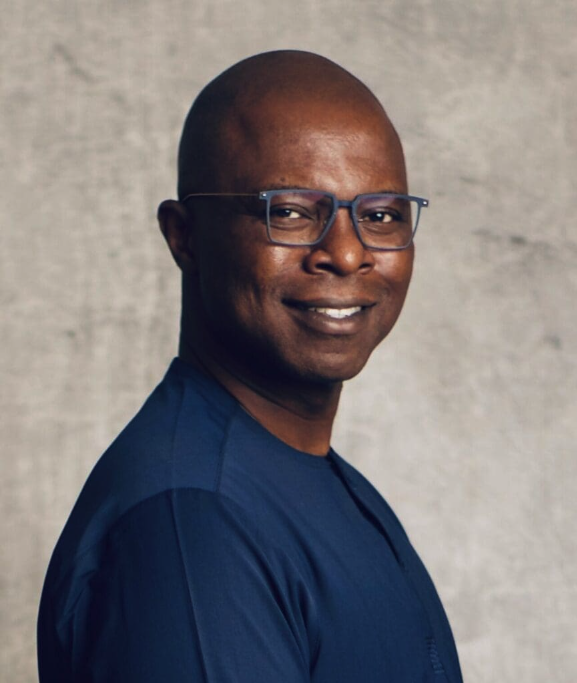
Sim Shagaya: Crafting Africa’s Digital Consumer Future One Venture at a Time

For more than a decade, Sim Shagaya has operated at the intersection of technology, consumer behavior and market creation across Africa. His companies have not only introduced new products to the continent’s digital economy, they have forced investors, policymakers and corporates to rethink what is possible in African markets. From DealDey to Konga and now uLesson, Shagaya has built a portfolio of ventures that consistently challenge the limits of infrastructure while proving that African consumers will adopt technology when it is designed with precision and patience. Shagaya’s entry into the entrepreneurial world began at a moment when Africa’s digital landscape was still fragmented. Internet access was uneven, payment systems were unreliable and logistics networks barely existed. Yet he recognized a shift in the behavior of urban consumers who were becoming increasingly comfortable transacting and consuming content online. His first major play, DealDey, tapped into this emerging demand by offering curated deals and experiences at a time when online shopping in Nigeria was far from mainstream. It quickly revealed both the promise and the constraints of internet commerce in the country. That insight shaped his approach to Konga, which became one of the most ambitious and technically complex e commerce companies Africa had ever seen. Rather than adopt a lightweight marketplace model, Shagaya chose a full stack strategy, building out logistics, warehousing, payment infrastructure and customer service capabilities from the ground up. This decision placed Konga in a league of its own. It forced investors to confront the real cost of scaling digital consumer businesses in Africa and set a new operational benchmark for the ecosystem. Even as competition intensified and market pressures mounted, Konga remained a key training ground for talent and a reference point for what disciplined execution in African e commerce could look like. His move into education technology with uLesson marked a shift in industry focus but not in ambition. Shagaya had become increasingly aware that African students were underserved by existing learning tools and that the continent’s young population represented one of the largest education markets in the world. uLesson was built to meet that need with content that reflected local curricula, interactive tools that matched student behavior and delivery methods suited to environments with inconsistent connectivity. The rapid adoption of the platform across multiple countries demonstrated that a homegrown education product could achieve scale and cultural relevance simultaneously. It also placed Shagaya at the center of a new conversation about the future of learning across Africa. What distinguishes Shagaya’s work is his ability to translate long term structural observations into operational strategy. He does not chase hype cycles or build for short term traction. He builds companies with the intention of reshaping consumer behavior over a long horizon. His ventures often arrive before the market is fully ready, but his timing has repeatedly proven accurate as the ecosystem catches up. That pattern explains why so many founders, operators and investors cite him as one of the clearest thinkers in African technology. Today, Shagaya stands as one of the most respected entrepreneurs on the continent not because his journey has been linear or without obstacles, but because his work has had measurable influence on how Africa’s digital economy has evolved. The companies he built, the talent he trained and the markets he helped shape continue to define the trajectory of African tech. In an ecosystem where scale is difficult and patience is rare, Sim Shagaya remains a reminder that enduring companies are built through discipline, insight and a deep understanding of the continent’s realities.


Culture, News In Brief

Microsoft Trains 4 Million Nigerians in Tech Skills, Certifies 70,000 in Three Years

Between 2021 and December 2024, Microsoft trained four million Nigerians in digital and artificial intelligence skills, with 70,000 earning globally recognized certifications. What began as an ambitious national conversation has become one of Nigeria’s largest coordinated digital skilling efforts, aimed at tackling unemployment and closing the country’s widening skills gap. When discussions first started between Microsoft executives in Nigeria and government officials in 2021, the target sounded almost unattainable. The goal was to reach five million Nigerians with future ready digital skills at a time when unemployment was high, the education system was under pressure, and access to advanced technology skills remained limited. According to Microsoft, the scale of the programme was intentional. It was built through collaboration with government, academia, and civil society, with a strong emphasis not only on training but also on certification as proof of competence in a global digital economy. Nonye Ujam, Director of Government Affairs at Microsoft West Africa, said the early conversations focused less on technology and more on jobs. “The government was very focused on employability,” she explained during a press briefing on December 16, 2025. “Our discussions centred on how digital skills could translate into real economic opportunity.” Microsoft aligned its skilling platforms with government priorities and worked through online tools and local partners to reach Nigerians across different states, income levels, and sectors. By the end of the first phase, four million people had accessed Microsoft’s digital learning resources. The company describes this as reach, but insists that exposure alone is not enough. Out of the four million Nigerians reached, about 350,000 actively engaged with the training programmes. More importantly, 70,000 earned Microsoft backed certifications in areas such as AI, software development, and data engineering. “Certification is the proof,” Ujam said. “It shows that someone completed the programme and met a global standard.” Microsoft argues that this distinction is critical in labour markets where informal learning is common but difficult for employers to verify. Certified credentials give learners a portable and trusted signal of skill, reducing the need to constantly prove competence. To scale effectively, Microsoft structured its strategy around three key groups. The first was organisational leaders in both the public and private sectors. While many are not technical, their understanding of digital transformation determines whether organisations adopt new technologies at all. The second group was developers and engineers, who received deeper technical training on modern development tools, cloud platforms, and AI frameworks. The third group was everyday technology users. Microsoft describes this as AI fluency, the ability to understand and use AI responsibly without being a specialist. The aim was to ensure AI skills are widely accessible rather than limited to a small elite. “These three groups form an ecosystem,” Ujam noted. “If one is missing, transformation slows down.” Microsoft says the programme’s reach would not have been possible without Nigerian partners. One of the most significant was Data Science Nigeria, which helped design and deliver locally relevant training. “We didn’t just reuse existing content,” said Aanu Oyeniran, Business Lead at Data Science Nigeria. “We built blended curricula using Nigerian examples.” The partnership adopted a hub and spoke model, with training centres across the country providing access to computers, internet connectivity, and trainers. Trainers were equipped to pass skills into their communities, creating a multiplier effect. Oyeniran shared the example of a trainer in Edo State who now helps small businesses analyse data and improve operations, while also training others in his community. Lagos Business School also played a key role, partnering with Microsoft to deliver AI leadership programmes for senior public sector officials. According to Professor Olayinka David-West, Dean of the school, the focus was on building capacity rather than chasing hype. “You can build all you want,” she said, “but if there is no capacity to absorb it, you are building for the sake of building.” Through the programme, 99 senior public servants from 58 government agencies completed intensive AI leadership training. Each participant developed a capstone project linked to their agency’s mandate, ensuring practical application of their learning. Microsoft’s skilling efforts run alongside Nigeria’s National AI Strategy, which was co-created by more than 100 Nigerian AI experts from around the world. As an industry partner, Microsoft contributed global insights while adapting them to local realities. Abideen Yusuf, General Manager of Microsoft Nigeria and Ghana, highlighted the urgency of the effort. “Nigeria’s AI adoption is still under 10 percent,” he said. “But the potential upside is enormous.” He noted that while Nigeria has growing data centre infrastructure, none are currently equipped to support AI workloads. Without a skilled workforce, investments in infrastructure alone will not deliver economic growth. Microsoft says the publicly reported figures do not include its enterprise focused training programmes within private organisations. Even so, training four million people and certifying 70,000 represents a rare attempt at population scale digital skilling in Nigeria. The company has announced an additional one million dollar investment to train another one million Nigerians, with the aim of completing its original target by June 2026. For Microsoft, the long term impact lies in how skills spread. “We see impact like an inverse pyramid,” Ujam said. “One person learns, teaches others, and the effect multiplies.” Whether that momentum translates into sustained economic growth will depend on continued government support, infrastructure investment, and Nigeria’s ability to absorb newly skilled workers into productive roles.

African Changemakers

Adesuwa Okunbo Rhodes and the $55 Million Bet That Is Redefining African Capital

Adesuwa Okunbo Rhodes is quietly becoming one of the most influential forces in African private capital. In a sector long dominated by men and foreign decision makers, she has built Aruwa Capital Management into one of the continent’s most powerful women-led investment firms The standard Lorem Ipsum passage, used since the 1500s “Lorem ipsum dolor sit amet, consectetur adipiscing elit, sed do eiusmod tempor incididunt ut labore et dolore magna aliqua. Ut enim ad minim veniam, quis nostrud exercitation ullamco laboris nisi ut aliquip ex ea commodo consequat. Duis aute irure dolor in reprehenderit in voluptate velit esse cillum dolore eu fugiat nulla pariatur. Excepteur sint occaecat cupidatat non proident, sunt in culpa qui officia deserunt mollit anim id est laborum.” Section 1.10.32 of “de Finibus Bonorum et Malorum”, written by Cicero in 45 BC “Sed ut perspiciatis unde omnis iste natus error sit voluptatem accusantium doloremque laudantium, totam rem aperiam, eaque ipsa quae ab illo inventore veritatis et quasi architecto beatae vitae dicta sunt explicabo. Nemo enim ipsam voluptatem quia voluptas sit aspernatur aut odit aut fugit, sed quia consequuntur magni dolores eos qui ratione voluptatem sequi nesciunt. Neque porro quisquam est, qui dolorem ipsum quia dolor sit amet, consectetur, adipisci velit, sed quia non numquam eius modi tempora incidunt ut labore et dolore magnam aliquam quaerat voluptatem. Ut enim ad minima veniam, quis nostrum exercitationem ullam corporis suscipit laboriosam, nisi ut aliquid ex ea commodi consequatur? Quis autem vel eum iure reprehenderit qui in ea voluptate velit esse quam nihil molestiae consequatur, vel illum qui dolorem eum fugiat quo voluptas nulla pariatur?” 1914 translation by H. Rackham “But I must explain to you how all this mistaken idea of denouncing pleasure and praising pain was born and I will give you a complete account of the system, and expound the actual teachings of the great explorer of the truth, the master-builder of human happiness. No one rejects, dislikes, or avoids pleasure itself, because it is pleasure, but because those who do not know how to pursue pleasure rationally encounter consequences that are extremely painful. Nor again is there anyone who loves or pursues or desires to obtain pain of itself, because it is pain, but because occasionally circumstances occur in which toil and pain can procure him some great pleasure. To take a trivial example, which of us ever undertakes laborious physical exercise, except to obtain some advantage from it? But who has any right to find fault with a man who chooses to enjoy a pleasure that has no annoying consequences, or one who avoids a pain that produces no resultant pleasure?” Section 1.10.33 of “de Finibus Bonorum et Malorum”, written by Cicero in 45 BC “At vero eos et accusamus et iusto odio dignissimos ducimus qui blanditiis praesentium voluptatum deleniti atque corrupti quos dolores et quas molestias excepturi sint occaecati cupiditate non provident, similique sunt in culpa qui officia deserunt mollitia animi, id est laborum et dolorum fuga. Et harum quidem rerum facilis est et expedita distinctio. Nam libero tempore, cum soluta nobis est eligendi optio cumque nihil impedit quo minus id quod maxime placeat facere possimus, omnis voluptas assumenda est, omnis dolor repellendus. Temporibus autem quibusdam et aut officiis debitis aut rerum necessitatibus saepe eveniet ut et voluptates repudiandae sint et molestiae non recusandae. Itaque earum rerum hic tenetur a sapiente delectus, ut aut reiciendis voluptatibus maiores alias consequatur aut perferendis doloribus asperiores repellat.” 1914 translation by H. Rackham “On the other hand, we denounce with righteous indignation and dislike men who are so beguiled and demoralized by the charms of pleasure of the moment, so blinded by desire, that they cannot foresee the pain and trouble that are bound to ensue; and equal blame belongs to those who fail in their duty through weakness of will, which is the same as saying through shrinking from toil and pain. These cases are perfectly simple and easy to distinguish. In a free hour, when our power of choice is untrammelled and when nothing prevents our being able to do what we like best, every pleasure is to be welcomed and every pain avoided. But in certain circumstances and owing to the claims of duty or the obligations of business it will frequently occur that pleasures have to be repudiated and annoyances accepted. The wise man therefore always holds in these matters to this principle of selection: he rejects pleasures to secure other greater pleasures, or else he endures pains to avoid worse pains.”

eni
Culture, Editors Pick, Startups

How Iyinoluwa Aboyeji Built Two Unicorns and Helped Ignite Africa’s Tech Revolution

In the global conversation about Africa’s tech renaissance, few names command the respect, data points, and track record of Iyinoluwa Aboyeji. Before he turned 30, he had already done what most founders spend a lifetime chasing: he helped build two unicorns that reshaped digital infrastructure across an entire continent. Today, he stands as one of Africa’s most influential ecosystem architects, a builder whose work has rippled from Lagos to Silicon Valley boardrooms. Aboyeji, known simply as E, is not just a startup founder. He is a force multiplier. An operator who understands markets, momentum, and the infrastructural gaps that hold back scale. And more importantly, a founder who walks away at the height of success to build what the ecosystem needs next. At 33, he is already a living blueprint for the next generation of African entrepreneurs. A Builder From First Principles Iyin’s entrepreneurial journey began long before the headlines, long before the billion dollar valuations, and long before African tech became a magnet for global capital. Raised in Lagos and later educated at the University of Waterloo, he absorbed two contrasting worlds: the extreme inefficiencies of African markets and the tight, efficient execution culture of Canadian tech hubs. That contrast shaped his thinking. He became obsessed with infrastructure: the invisible rails that make innovation possible. And that obsession would later produce two companies that fundamentally shifted how Africa moves money and builds jobs. The Andela Experiment: Can Africa Build Talent At Scale? In 2014, Aboyeji co founded Andela, a talent accelerator built on a radical premise: that Africa’s young population could supply the world with world class technical talent. With support from the founders of L5 Labs and a partnership with Jeremy Johnson, Andela became one of the most ambitious social–economic experiments in modern African tech. The company raised hundreds of millions from global investors and secured early backing from the Chan Zuckerberg Initiative. Andela went on to become a unicorn, validating a thesis many had overlooked: African engineers could compete globally when given the right structure, curriculum, and opportunity. But at the height of its rise, Aboyeji did what few would dare. He stepped aside and walked toward a new frontier. Flutterwave: Building the Rails for a Digital Continent Africa’s economy was digitizing, but the infrastructure that allowed money to move between businesses was fragmented and slow. In 2016, he co founded Flutterwave to solve that. The idea was simple: build the payments pipes for the continent. But the execution was monumental. Flutterwave became one of the fastest growing African fintechs in history, powering payments for multinationals, small businesses, and emerging startups across dozens of African markets. By 2021, the company reached a three billion dollar valuation, making it one of Africa’s top unicorns and a central node in the continent’s digital commerce engine. Once again, Aboyeji stepped back after the foundational phase, choosing not to stay for the glory but to build the next critical institution. Future Africa: Turning Builders Into a Movement After Andela and Flutterwave, E had a new mission: help the next generation of African founders get the early capital and knowledge that he never had. He launched Future Africa, a fund and community investing in mission driven founders solving Africa’s biggest challenges. The platform has now backed dozens of startups across fintech, climate, agriculture, health, logistics, and education. What makes Future Africa different is not just capital. It is the idea that builders are the best people to back other builders. And the results prove it: the fund has already produced several high growth ventures and seeded founders who are solving real problems for millions. E is not creating a VC firm. He is building a movement. Why Global Investors Are Paying Attention Aboyeji represents something global investors rarely find in emerging markets: a founder with repeat unicorn scale track record. His influence extends beyond boardrooms into policy, innovation ecosystems, and the cultural imagination of African entrepreneurship. He is shaping how talent is groomed, how capital flows, and how founders think about scale. For global allocators trying to understand the next decade of African innovation, E is one of the most credible operators to watch. The Legacy He Is Writing Iyinoluwa Aboyeji is part of a rare category of founders who build infrastructure, not just companies. Andela built the talent rails. Flutterwave built the payment rails. Future Africa is building the capital rails. Three layers of one long term vision. Not every generation gets a builder who sees an entire continent not for what it is, but for what it could become. Africa’s digital economy today owes part of its architecture to the decisions he made, the risks he took, and the companies he walked away from so he could build again. In the story of modern African entrepreneurship, Aboyeji is not just a chapter. He is one of the authors.

Founder
African Changemakers, Startups

How an African Founder Is Reimagining Global Hospitality

Emmanuel Egbeiyon: The African Founder Reimagining Global Hospitality In an industry long dominated by Western platforms and fragmented local operators, Emmanuel Egbeiyon is quietly building a new narrative. One where Africa is not just a destination, but a source of global hospitality innovation. As the Founder and CEO of EmaGlobalStays, Emmanuel represents a new generation of African entrepreneurs thinking beyond borders, redefining how trust, technology, and travel intersect across the EMEA region and beyond. From Africa to the World Emmanuel’s journey into hospitality did not begin with real estate, nor was it driven by traditional tourism models. Instead, it was shaped by a simple but powerful observation: while global travel was becoming increasingly digital, hospitality across emerging markets remained fragmented, inconsistent, and often untrusted. Guests struggled with verification, quality assurance, and transparency. Hosts lacked reliable platforms that protected their assets and reputations. Across Africa and parts of the Middle East, hospitality existed, but the systems supporting it were outdated. This gap became the foundation for EmaGlobalStays. Founded in 2019, EmaGlobalStays started operations in Dubai, one of the world’s most competitive hospitality markets. Rather than seeing this as a challenge, Emmanuel viewed Dubai as the ultimate testing ground. If a new hospitality platform could survive and thrive there, it could work anywhere. Building a PropTech Hospitality Platform Unlike traditional short stay companies, EmaGlobalStays was never designed to be a real estate business. Emmanuel deliberately positioned it as a proptech driven hospitality ecosystem. At its core, EmaGlobalStays connects verified guests with curated premium homes across multiple cities. The focus is not volume, but quality, trust, and consistency. Every host is vetted. Every property is reviewed. Every guest is verified. This approach reflects Emmanuel’s belief that hospitality is not just about accommodation, but about confidence. Confidence that a stay will match expectations. Confidence that both guests and hosts are protected. Confidence that experiences are standardized across borders. Today, EmaGlobalStays operates across multiple cities, with expansion across Africa, the Middle East, and Europe firmly underway. Why Africa Is Central to the Vision While EmaGlobalStays is global in ambition, Africa sits at the center of Emmanuel’s long term strategy. He sees Africa not as a secondary market, but as the next frontier of global hospitality growth. A continent with a rising middle class, growing intra-African travel, increasing global tourism interest, and an underserved premium short stay segment. Yet, Africa’s hospitality challenge is not demand. It is structure. “There is demand, there are beautiful homes, there are great hosts,” Emmanuel often explains. “What’s missing is a unified, trusted system that connects everything seamlessly.” EmaGlobalStays is designed to be that system. By combining technology, local partnerships, and strict quality control, Emmanuel aims to unify fragmented hospitality markets under one trusted brand, while respecting local culture and operational realities. A Founder With a Systems Mindset What sets Emmanuel apart is not only vision, but execution discipline. He approaches hospitality as an infrastructure problem, not just a service problem. His focus is on building scalable systems, clear processes, and strong governance that allow the platform to grow sustainably. This mindset has attracted interest from angel networks, private investors, and ecosystem leaders across Africa and Europe. Emmanuel is intentional about partnerships, preferring strategic alignment over fast capital. For him, growth without trust is fragile. Redefining African Representation in Global Tech Beyond EmaGlobalStays, Emmanuel represents something larger. He is part of a growing wave of African founders building globally relevant companies without waiting for validation. Founders who understand local markets deeply, yet design products that can scale internationally. In an industry often shaped by narratives about Africa rather than narratives from Africa, Emmanuel’s work challenges perceptions. It shows that African entrepreneurs can lead innovation in sectors traditionally controlled by global incumbents. Looking Ahead The long term vision for EmaGlobalStays is ambitious. To become Africa’s first globally recognized proptech hospitality brand.To create a connected ecosystem that unifies travel, trust, and premium living across cities.To set new standards for how hospitality platforms operate in emerging markets. For Emmanuel Egbeiyon, this is not just about building a company. It is about reshaping how Africa participates in the global hospitality economy.