News In Brief

News In Brief

Flutterwave Rolls Out Stablecoin Balances for Merchants With Turnkey, Nuvion

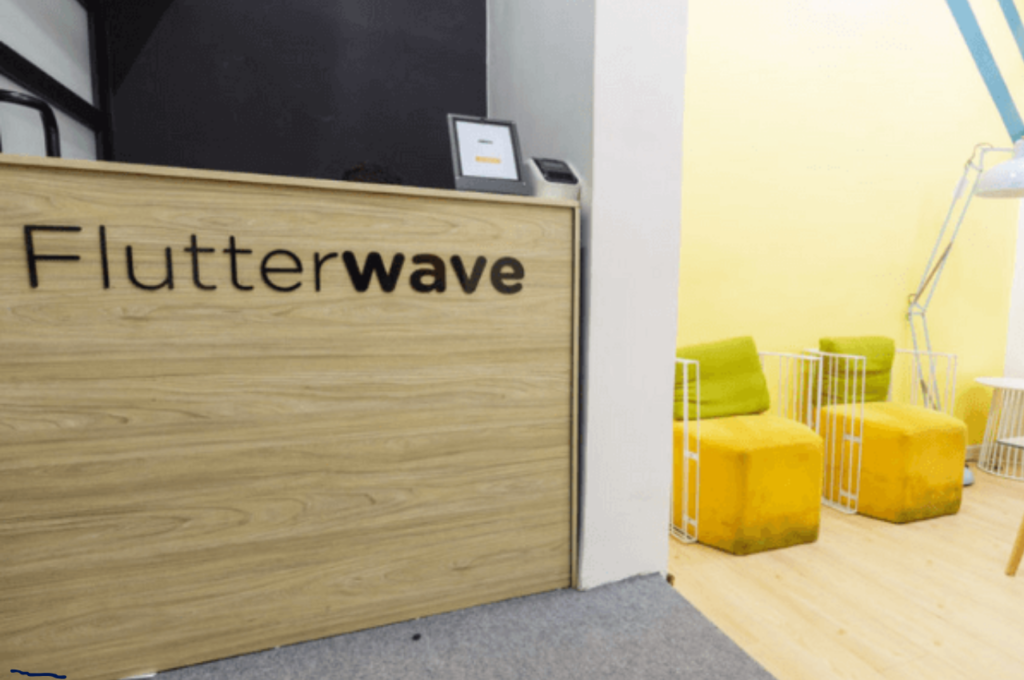
Flutterwave has launched stablecoin balances for merchants and users on its platform, partnering with wallet infrastructure provider Turnkey and global banking platform Nuvion to support embedded wallets for cross border payments. Founded in 2016 by Olugbenga Agboola and Iyinoluwa Aboyeji, Flutterwave has grown into one of Africa’s largest payments infrastructure firms by helping businesses accept and move money across markets. The company is now extending that core pitch into stablecoins, as more merchants look for faster settlement and lower fees than traditional banking routes often allow. The new feature lets selected users hold and transact in stablecoins such as USDC and USDT, alongside fiat balances including the U.S. dollar and the naira, within Flutterwave’s products. The company said the rollout will start with a limited group of merchants, with plans to expand access later in the year. Nkem Abuah, Flutterwave’s lead for remittances and stablecoin partnerships, said the aim is to make it easier for African businesses to accept regulated payment methods from a global customer base, including stablecoins. Turnkey is providing the wallet and security layer that powers the embedded wallet experience, while Nuvion is designed to bridge fiat and stablecoin rails so merchants can move between currencies within a single workflow. Turnkey chief executive Bryce Ferguson said stablecoins can reduce reliance on intermediaries and improve efficiency for business owners. Flutterwave has been building toward this shift. In October 2025, it partnered with Polygon Labs for cross border stablecoin settlement, and it has continued to expand its infrastructure footprint, including its acquisition of Nigerian open banking startup Mono in 2025.

News In Brief

Nigeria Leads Africa in Deals Count but Low on Funding Share Ratio

African startups recorded $3.8 billion in funding in 2025, up 32% from 2024, according to Briter’s Africa Investment Report 2025. The recovery was uneven. Capital flowed mainly to a small group of markets and a small number of large rounds. Nigeria recorded its lowest share of funding among Africa’s four largest startup hubs. Startups in the country accounted for 8% of total disclosed funding in 2025, behind South Africa (32%), Kenya (29%) and Egypt (15%). It was Nigeria’s weakest share since 2019, a shift for a market that previously led Africa by deal value. The fall came even as Nigeria posted the highest number of deals on the continent. That split, high deal volume but low share of capital, suggests a market where company formation and early stage fundraising remain active, while growth stage funding has become harder to secure. Briter’s report shows that cheque sizes increasingly skewed toward fewer, larger rounds, which shaped outcomes. In 2025, fewer than 5% of deals exceeded $50 million, yet those deals accounted for about half of disclosed funding. This concentration helped shape outcomes in markets that attracted late stage capital, while countries with more early stage rounds saw smaller totals despite high activity. Only a handful of large Nigerian rounds stood out in 2025 with Moniepoint’s $90 million Series C extension one of the country’s biggest disclosed deals. Kenya and South Africa, by comparison, benefited from more growth stage capital landing in fewer companies. Egypt continued to attract sizeable rounds, including in capital intensive sectors that tend to draw larger cheques. The report linked Nigeria’s weaker share to market conditions as well as investor preference pointing to macroeconomic pressures, currency volatility, and reduced foreign investor exposure as factors that have dampened large equity investments in Nigeria over recent years. Nigeria’s relative share has declined since 2021, even as deal activity remained high. By sector, fintech and digital financial services remained the most funded category in 2025 by both value and deal count, maintaining a long running trend across the continent. This is closely followed by climate focused solutions raising more than three times their 2024 total, with solar energy leading funding activity. Much of that climate capital went to markets seen as offering clearer infrastructure pathways and more predictable returns, including South Africa and Kenya. Investor attention to artificial intelligence also increased, despite that funding was concentrated in applied products rather than deep research and development. The report also highlighted a shift in how startups financed growth. Debt financing crossed $1 billion for the first time, overtaking equity as some scaled startups relied more on loans, structured facilities and other non-dilutive instruments. This move reflects a preference for revenue strength, asset backing and predictable cash flows, rather than aggressive expansion. Exit activity subsequently reached an all-time with over 63 acquisitions recorded in 2025. More than half involved corporate buyers rather than other startups or private equity firms. Although most deals values were not disclosed, but the volume points to a market where acquisitions are becoming a more common path to scale. Foreign investors remained the main source of venture funding, led by the United States and Europe. The pool is gradually widening, with more inflows from Asia and the Gulf, alongside a stronger base of Africa focused investors providing steadier capital. For Nigeria, the picture is mixed. Even as it continues producing more start-ups and closing deals than any other market, the funding decline suggests fewer companies are reaching the stage where they can attract large rounds, or investors are choosing to place growth capital elsewhere.

News In Brief

Nigeria’s MAX Raises $24 Million to Scale Electric Mobility and Clean Energy Infrastructure

Nigerian electric mobility startup MAX has raised $24 million in fresh funding to accelerate the rollout of electric vehicles and clean energy infrastructure across Africa, as the continent looks to reduce transport costs and emissions. MAX, which operates Africa’s first integrated electric vehicle and battery subscription platform, said the funding will support the expansion of its EV fleet, solar-powered battery-swapping network, and mobility technology across multiple African markets. The funding round combines equity investment from Equitane DMCC, Novastar, Endeavor Catalyst, and other global investors, alongside asset-backed and climate-focused debt from the Energy Entrepreneurs Growth Fund, managed by Triple Jump, and other development finance partners. MAX operates across Nigeria, Ghana, and Cameroon, offering electric vehicles, battery swapping, financing, and fleet management technology tailored to Africa’s informal and commercial transport sectors. The company aims to lower operating costs for drivers while supporting the transition to zero-emissions mobility. The startup said the capital will be deployed to rapidly scale its electric vehicle fleet, expand its battery-swapping infrastructure powered by renewable energy, strengthen its proprietary Internet of Things and fleet management systems, and support further geographic expansion across West and Central Africa. “Profitability in Nigeria proves that electric mobility in Africa is not a future concept. It is viable, scalable, and investable today,” said Adetayo Bamiduro, co-founder and chief executive officer of MAX. “This capital allows us to scale faster, deepen clean energy infrastructure, and build a truly pan-African mobility platform that expands access, lowers costs, and delivers durable impact.” The funding underscores growing investor interest in African climate and mobility solutions, as governments and businesses seek alternatives to fossil fuel dependent transport systems amid rising fuel prices and urban congestion.

Cover Stories, News In Brief

Paystack Creates Holding Company as Profitability Fuels Broader Expansion

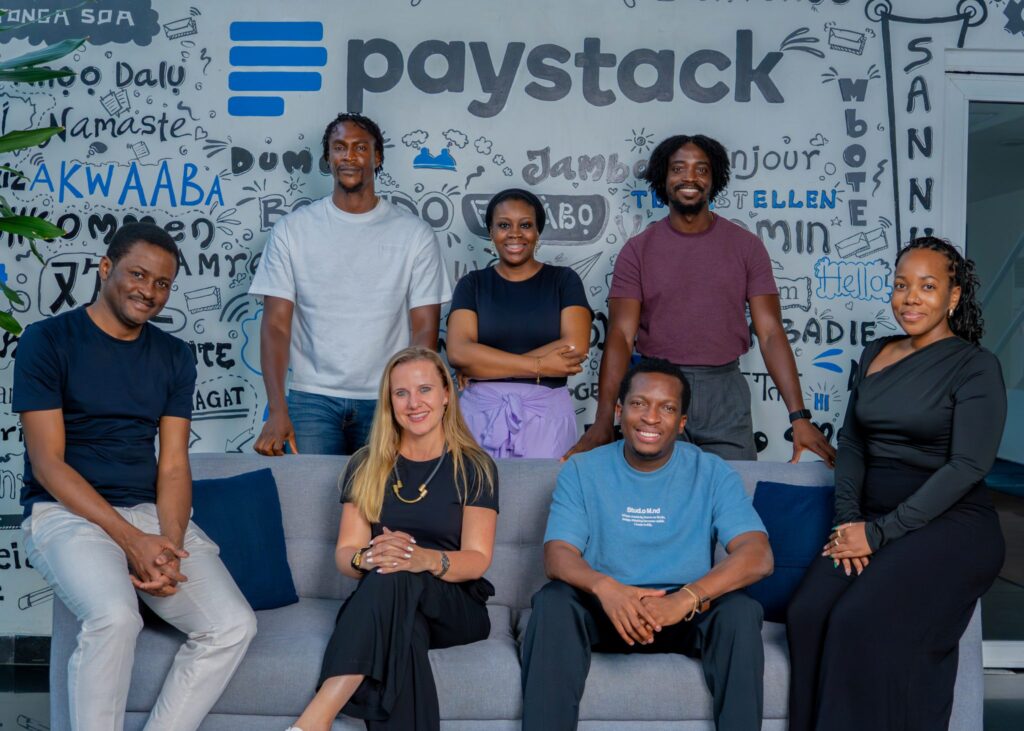
Paystack, the Nigerian fintech acquired by Stripe, has restructured its operations under a newly formed holding company, The Stack Group, as the company reports group-wide profitability and positive monthly cash flow. The new structure brings Paystack, its consumer payments app Zap, Paystack Microfinance Bank, and a venture studio under a single umbrella, marking a shift toward a multi-brand technology group with ambitions beyond merchant payments. While Stripe’s $200 million acquisition made Paystack a wholly owned subsidiary, The Stack Group introduces a different ownership structure. The holding company is jointly owned by Paystack chief executive officer Shola Akinlade, Stripe, and existing Paystack employees, known internally as Stacks. The company declined to disclose the breakdown of the cap table. The launch coincides with a period of strong financial performance, with Paystack growing payment volumes more than twelvefold since the Stripe acquisition and reaching profitability across the group. Akinlade said the new structure reflects a broader long-term ambition. He added that the holding company sets the tone for the company’s next decade, allowing it to pursue multiple growth paths while preserving focus on its core payments business. The restructuring formalises a transition that has been underway for over a year. With the rollout of Zap and the launch of Paystack Microfinance Bank, the company has gradually expanded from merchant payments into consumer finance and banking, seeking greater control over the flow of funds and new revenue streams. By separating its merchant payments business from newer verticals, The Stack Group allows each unit to pursue independent strategies while limiting regulatory, operational, and reputational spillovers. Payments, banking, and consumer financial products carry different risk profiles, and housing them under a holding company allows licences, compliance, and oversight to be managed separately. The structure also allows Paystack’s core business to remain a focused merchant payments provider, while Zap and Paystack Microfinance Bank compete in Nigeria’s crowded consumer finance market without diluting the Paystack brand. Paystack was founded in 2016 and quickly rose to prominence as a low-cost alternative to existing online payment processors in Nigeria. It became the first Nigerian startup accepted into Y Combinator and achieved one of Africa’s largest technology exits when it was acquired by Stripe in 2020. Since then, the company has expanded operations to five African countries and now processes trillions of naira in payments each month. Its improved balance sheet has enabled it to experiment beyond payments, including the creation of a venture studio focused on developing new products using emerging technologies. The Stack Group will operate with a separate board from its subsidiaries, continuing a governance model that maintains multiple boards across the group in line with regulatory requirements. Subsidiaries will retain operational autonomy, with leadership structures tailored to their individual stages of growth. The company joins other Nigerian technology firms, including Moniepoint and Interswitch, that have adopted holding company structures to support multi-business ecosystems and long-term expansion. Despite entering competitive consumer payments and banking markets, Paystack said it remains focused on long-term ambition rather than short-term rivalry. The company plans to draw on its experience serving African businesses, while acknowledging that scaling consumer-facing financial products presents challenges distinct from merchant payments.

Culture, News In Brief

Nigeria Tightens Capital Rules for Fintechs and Digital Asset Operators

Nigeria’s Securities and Exchange Commission has raised minimum capital requirements for a wide range of capital market operators, tightening financial thresholds for fintech companies, virtual asset service providers, and other regulated firms. In a circular issued on January 16, 2026, the regulator said the revised standards are designed to strengthen the financial resilience of market participants while ensuring that regulatory requirements reflect the growing scale, complexity, and risk exposure of modern financial services businesses. The updated framework applies to fintech operators, virtual asset service providers, crowdfunding platforms, robo advisers, fund managers, and market infrastructure institutions. The SEC said the changes form part of a broader effort to improve market stability, enhance investor protection, and align Nigeria’s capital market rules with evolving global best practices. Among the most notable revisions are higher capital requirements for robo advisers, which provide automated investment and financial planning services. Under the new rules, the minimum capital threshold for robo advisers has been increased to ₦100 million from ₦10 million previously. Crowdfunding intermediaries will also face higher requirements, with minimum capital doubled to ₦200 million from ₦100 million. Virtual asset service providers are subject to some of the sharpest increases. Digital asset exchanges and digital asset custodians must now maintain minimum paid up capital of ₦2 billion each. Ancillary virtual asset service providers are required to hold at least ₦300 million. The rules also raise capital thresholds for alternative investment fund managers. Private equity fund managers must now maintain a minimum capital base of ₦500 million, while venture capital fund managers are required to hold at least ₦200 million. The SEC said affected operators have until June 30, 2027, to comply fully with the revised requirements. Firms that fail to meet the new thresholds within the stipulated timeframe risk regulatory sanctions, including suspension of operations or withdrawal of registration. The regulator said the measures are intended to ensure that only adequately capitalised firms operate in Nigeria’s capital market, particularly as fintech and digital asset activities expand and become more interconnected with the broader financial system.

Culture, News In Brief

Microsoft Trains 4 Million Nigerians in Tech Skills, Certifies 70,000 in Three Years

Between 2021 and December 2024, Microsoft trained four million Nigerians in digital and artificial intelligence skills, with 70,000 earning globally recognized certifications. What began as an ambitious national conversation has become one of Nigeria’s largest coordinated digital skilling efforts, aimed at tackling unemployment and closing the country’s widening skills gap. When discussions first started between Microsoft executives in Nigeria and government officials in 2021, the target sounded almost unattainable. The goal was to reach five million Nigerians with future ready digital skills at a time when unemployment was high, the education system was under pressure, and access to advanced technology skills remained limited. According to Microsoft, the scale of the programme was intentional. It was built through collaboration with government, academia, and civil society, with a strong emphasis not only on training but also on certification as proof of competence in a global digital economy. Nonye Ujam, Director of Government Affairs at Microsoft West Africa, said the early conversations focused less on technology and more on jobs. “The government was very focused on employability,” she explained during a press briefing on December 16, 2025. “Our discussions centred on how digital skills could translate into real economic opportunity.” Microsoft aligned its skilling platforms with government priorities and worked through online tools and local partners to reach Nigerians across different states, income levels, and sectors. By the end of the first phase, four million people had accessed Microsoft’s digital learning resources. The company describes this as reach, but insists that exposure alone is not enough. Out of the four million Nigerians reached, about 350,000 actively engaged with the training programmes. More importantly, 70,000 earned Microsoft backed certifications in areas such as AI, software development, and data engineering. “Certification is the proof,” Ujam said. “It shows that someone completed the programme and met a global standard.” Microsoft argues that this distinction is critical in labour markets where informal learning is common but difficult for employers to verify. Certified credentials give learners a portable and trusted signal of skill, reducing the need to constantly prove competence. To scale effectively, Microsoft structured its strategy around three key groups. The first was organisational leaders in both the public and private sectors. While many are not technical, their understanding of digital transformation determines whether organisations adopt new technologies at all. The second group was developers and engineers, who received deeper technical training on modern development tools, cloud platforms, and AI frameworks. The third group was everyday technology users. Microsoft describes this as AI fluency, the ability to understand and use AI responsibly without being a specialist. The aim was to ensure AI skills are widely accessible rather than limited to a small elite. “These three groups form an ecosystem,” Ujam noted. “If one is missing, transformation slows down.” Microsoft says the programme’s reach would not have been possible without Nigerian partners. One of the most significant was Data Science Nigeria, which helped design and deliver locally relevant training. “We didn’t just reuse existing content,” said Aanu Oyeniran, Business Lead at Data Science Nigeria. “We built blended curricula using Nigerian examples.” The partnership adopted a hub and spoke model, with training centres across the country providing access to computers, internet connectivity, and trainers. Trainers were equipped to pass skills into their communities, creating a multiplier effect. Oyeniran shared the example of a trainer in Edo State who now helps small businesses analyse data and improve operations, while also training others in his community. Lagos Business School also played a key role, partnering with Microsoft to deliver AI leadership programmes for senior public sector officials. According to Professor Olayinka David-West, Dean of the school, the focus was on building capacity rather than chasing hype. “You can build all you want,” she said, “but if there is no capacity to absorb it, you are building for the sake of building.” Through the programme, 99 senior public servants from 58 government agencies completed intensive AI leadership training. Each participant developed a capstone project linked to their agency’s mandate, ensuring practical application of their learning. Microsoft’s skilling efforts run alongside Nigeria’s National AI Strategy, which was co-created by more than 100 Nigerian AI experts from around the world. As an industry partner, Microsoft contributed global insights while adapting them to local realities. Abideen Yusuf, General Manager of Microsoft Nigeria and Ghana, highlighted the urgency of the effort. “Nigeria’s AI adoption is still under 10 percent,” he said. “But the potential upside is enormous.” He noted that while Nigeria has growing data centre infrastructure, none are currently equipped to support AI workloads. Without a skilled workforce, investments in infrastructure alone will not deliver economic growth. Microsoft says the publicly reported figures do not include its enterprise focused training programmes within private organisations. Even so, training four million people and certifying 70,000 represents a rare attempt at population scale digital skilling in Nigeria. The company has announced an additional one million dollar investment to train another one million Nigerians, with the aim of completing its original target by June 2026. For Microsoft, the long term impact lies in how skills spread. “We see impact like an inverse pyramid,” Ujam said. “One person learns, teaches others, and the effect multiplies.” Whether that momentum translates into sustained economic growth will depend on continued government support, infrastructure investment, and Nigeria’s ability to absorb newly skilled workers into productive roles.